I’ve set this blog up for my J452 course. I’m going to use it to look at the film industry through a public relations lens. This will be a fun new take on film for me, having written reviews previously and mainly looked at cinema through an academic lens. With the Academy Awards coming up in just over a month, I felt that now would be a great time to check in with the academy and see how any changes from last year’s “#OscarsSoWhite” controversy are received.
Photo By Davidlohr Bueso
Additionally, I plan to look at good and bad examples of PR from actors and studios. A Dog’s Purpose recently made headlines due to poor treatment of the dog in the film, I will delve into the response of the studio and the organization that is being accused, seeing how the situation is handled. Hint: they aren’t doing a very good job.
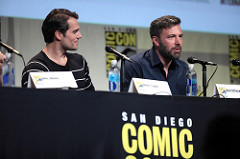
I will also look at how individual performers or creators can have an effect on the PR cycle, looking at Warner Bros. efforts to create a cinematic universe that is failing to perform on the same level as its competition; Ben Affleck’s response to the poor reception of Batman Vs. Superman: Dawn of Justice; and David Goyer’s outburst at the premiere of Suicide Squad last summer.
Photo by Gage Skidmore
My aim is to make this blog both informative, fun and easy to understand for those not familiar with public relations. There should be plenty to write about in the coming weeks as new films are released and discussion around the Oscars spins up when the nominees are announced on Jan. 24. I’ll avoid posting about that particular issue too much, however, because I do want to take the time to explore other instances of public relations in this field.
Thanks for reading, and hope to see you back here to see what I have to say!
As I am currently applying to teach English in Japan, I think it is only appropriate that I write about the Japanese movie landscape at least once. You can learn a lot about a culture through the films made and viewed within it, especially if you’re a fan of horror movies like me. But I’ll be talking about an animated film, as that tends to be what gains the most success in North America, at least from Japan.
I recently saw an article on the Japan Times site that said “Your Name,” an animated movie was beating the top two global box-office performers (“Captain America: Civil War” and “Rouge One: A Star Wars Story”) in Japan. Much more impressive when you realize that Disney produced the four of the five top-grossing films of 2016. Unfortunately for Disney, Studio Ghibli did not produce “Your Name,” Japan’s top box office hit of 2016, or the company could add a little more to their empire through their distribution deal.
Tokyo is the economic hub and Hollywood of Japan.
In fact, “Your Name” is the second highest-grossing Japanese film ever. Right behind Studio Ghibli’s Oscar-winning “Spirited Away.” But, for some reason, Japanese films find difficulty gaining commercial success in North America. “Spirited Away,” only managed to earn $10 million at the North American box office after it won the Best Animated Feature award at the Oscars.
The success of “Your Name” is providing an opportunity for the Japanese film industry that has not existed in 15 years. The chance to reintroduce Japanese cinema to Western audiences and provide a boost to the already thriving Japanese film industry. Hollywood is losing ground in Japan, which affords the Japanese industry a chance to expand. Though, this is probably unlikely as Japanese companies tend to be conservative and slow to move. This Washington Post article about Sony details that.
In my opinion, those responsible for creating the film have already had a major misstep in their plans to bring the film to North America. They have licensed with Funimation, a company that has reliably distributed anime in North America for many years. The problem being, the company markets to an audience who is already interested in these types of films. So, “Your Name” will release and an incredibly dedicated core audience will see the film, and generate some buzz. The film will probably go on to see very little commercial success in the states, even less than “Spirited Away” because it did not get an Oscar bump, not even a nomination.
While Disney is probably not an option because of their deal with studio Ghibli, the creators should have looked at distributors outside their normal partnerships, as this is not a normal movie for them. I would be thrilled to be wrong about this and see “Your Name” go on to see immense success in North America and create an influx of Japanese cinema to the country.
The film is about two high schoolers who swap bodies when they dream, and boy does it have a look.
Instead, a movie that recreates a Japanese work (Ghost in The Shell) in a western style (with Scarlett Johansson as the lead) will probably go on to be mildly successful and be what people consider Japanese cinema for years to come. Or, maybe it will generate interest in the source material and create interest that way. That all depends on if the film is any good, though.
You can go see “Your Name” in theaters in April and check out another Japanese work, “Ronja, The Robber’s Daughter” on Amazon Prime. “Ronja” is a series created by Studio Ghibli based on a Swedish children’s book for Amazon, which has been receiving positive reviews.
Awards season: the time of year when everyone is suddenly an expert on every form of entertainment, from music to movies. A time for office betting pools, ill-conceived comedy breaks, emotional speeches, and for everyone to act surprised when the year’s cinematic juggernaut takes home the award for best picture. This year that was predicted to be “La La Land,” but in a turn of events that was shocking to everyone, it didn’t take home the trophy. Even if the cast and crew got to hold the statue for a short time.
Warren Beatty and Faye Dunaway were tasked with delivering the best picture nomination, on the 50th anniversary of the release of “Bonnie and Clyde.” A great way to tie into film history. But things seemed amiss as Beatty opened the envelope and hesitated to read the results, he instead handed the envelope to his co-presenter to crown “La La Land” the winner.
If you haven’t seen the clip, you can watch it here.
The more cynical film fans were prepared to see the film take home the coveted Best Picture statue despite their preference for any number of other films nominated. Well, maybe not “Manchester by the Sea.” That’s why, when Jordan Horowitz rushed the microphone to say “There’s a mistake, ‘Moonlight,’ you guys won Best Picture,” he was met with a smattering of light applause. It’s not uncommon for award winners to dedicate their awards to other films, and say they are deserving. It is entirely uncommon for them to actually mean that they have been mistakenly given the award.
I had all but tuned out from the speech and began to look at reactions on twitter when I heard Horowitz announcing “Moonlight” as the real winner. At first, I assumed it was a goodwill gesture, not unlike Adele’s acceptance speech at the Grammys earlier in the year where she praised Beyonce’s work. Shockingly, it was an honest-to-goodness mistake and instantly brought my attitude on the show around to a more positive one. I’m still upset about Lin Manuel-Miranda not taking home Best Song, though.
There were a few not feeling so great about the turn of events, other than the surprised cast of “La La Land.” The representatives of PricewaterhouseCoopers, the accounting firm that has done the polling and tabulations for the academy awards for the past 83 years are rather displeased. Undone by social media, Twitter specifically, Brian Cullinan handed Beatty the wrong envelope while busy tweeting backstage photos. Something he had been told not to do. Maybe he just wanted to impress Bonnie and Clyde by breaking the rules.
Oscars kinda… predictable! FiveThirtyEight algorithm went 8 for 8. Betting markets were good too. https://t.co/7pAoRGKKEs
The immediate reaction by many, accurately portrayed by Kimmel on stage, was “Warren, what did you do?” Which PwC reportedly tried to capitalize on, to protect their name. In meetings, it is said that PwC blamed Beatty for the mix-up, which the Academy was not having. Several hours later PwC issued an apology, clarifying what had happened. Not a great look to blame the presenters for having the wrong materials, when your job is to literally give them the correct information.
Unfortunately, Cullinan and Ruiz have been the victim of some harassment following the incident, causing PwC to hire bodyguards to protect the homes of the two accountants. Their home addresses were disseminated on the internet, a practice known as doxing, leading to multiple people showing up outside of their homes. Hopefully, something that stops quickly.
Perhaps, this story will help generate interest in next year’s show. Ratings this year were lower than recent years. This probably has something to do with the perception of Hollywood as the “liberal elite” leading to much of middle America not watching the show. Not a great year for the Academy, despite them doing their best to deliver on the promises they made last year.
Personally, I do not put a lot of value into Awards shows. Though I’m glad I caught this one, just for the historical significance. It is nice to see people receive recognition for the hard work they put in, but a film winning an award will not increase my likelihood of seeing it. Do awards shows affect the way you choose what films to watch?
Film Festivals occupy a special place in the film industry. They provide a platform for emerging creators and actors to make a debut and give audiences and critics early looks at what may become the next awards season darling.
They also make a lot of money.
The 2016 Sundance Film Festival created $143 million of economic activity for Utah and the cities the festival took place in. That includes the jobs created, hotel accommodations, food being purchased and people attending the festival. The whole event takes place over 10 days, allowing people from all over the world to attend and see new up-and-coming filmmakers work, as well as media representatives from 22 countries that cover the festival. That is a lot of business and publicity for the city and those filmmakers.
The Toronto International Film Festival (TIFF) is similarly sized but tends to not get the mainstream coverage that Sundance gets in the United States. In fact, in 2013, TIFF contributed approximately $189 million to the economy of Toronto. Films like “Ray,” “Precious,” “Slumdog Millionaire,” and “Silver Linings Playbook” all premiered at TIFF. What do those films have in common? They all went on to win Oscars. And, those are just a few of the films that debuted at the festival and went on to win awards, there are much more.
Festivals also provide a chance for fans to see the actors and directors from films being shown at the Festival. Zac Efron was at TIFF for the premiere of “The Paperboy” in 2012.
But, not everyone can afford to go to a big festival like TIFF or Sundance or to fly to France and attend Cannes or one of the many other film festivals held in Europe.
The good news is, there are probably film festivals happening all around you. Eugene, OR is home to numerous festivals where entrants compete for scholarships and cash prizes.
The Adrenaline Film Fest sees competitors take a mere 72 hours to write, produce and edit their entry. It is run through The University of Oregon but is open to anyone interested in creating a film. A major draw of the festival is that accomplished filmmakers like Jeff Wadlow (Directors of “Kick-Ass 2”) are invited to help entrants make the most of their time and learn new things. The festival has been on
The festival has been on hiatus for a year, but the organizers hope to revive it soon.
Full disclosure, I was an extra in an Adrenaline Film Fest project that a friend created. I believe it won the audience Choice Award. For those interested, it is about a waiter, who is desperately trying to prevent a couple from getting engaged, which both are reluctantly planning to do.
My personal favorite of the local film festivals, however, is the 72-hour Horror Film Competition. Like the Adrenaline Film Fest, the entrants have a limited amount of time to create their entry and they must all include that year’s chosen line of dialogue and prop. Examples include “You’re gonna die up there,” and “sometimes when people are scared they say and do terrible things.” Winners can receive cash prizes and things like free equipment rentals from local businesses that sponsor the event.
This is my personal favorite of the 72-hour horror competition entries. A well-done monster in the closet story.
Those are just two examples of the festivals that happen in Eugene, there are several more that happen throughout the year, and they happen all over the country too. Do a quick google search and find one in your area and go. You might find something you really like.
The smell of butter in the air, sticky floors, the sound of slurping sodas. These are all things quintessential to the movie experience, and we may be in danger of losing them. At least in this particular combination.
According to Business Insider, this can be attributed to a few things.
1) Movie theaters are less relevant than ever before. As subscriptions like Netflix and Amazon Prime become more ubiquitous and garner larger libraries, there is less need to go to the theater to see something new. Additionally, faster in-home releases of films now mean audiences do not have to wait as long to see the film from the comfort of their living room or bed.
2) The cookie-cutter nature of many of the high concept blockbuster films that are released. The assembly line nature does not seem to draw in audiences like it did in the era of the studio system. Though recent releases tend to score high with critics. Audiences are unsure of what films are worthy of their money, so they wait until they can watch it comfortably at home; possibly on a service they already pay for.
“Top Gun” is the very definition of high concept filmmaking. “‘Star Wars,’ but on Earth.”
By PH2 Michael D.P. Flynn, U.S. Navy [Public domain], via Wikimedia Commons
3) An overabundance of sequels, reboots, and spinoffs has audiences stunned and unable to choose what is worth seeing. Because there are so many of these films, audiences may choose to only see one, or none in theaters and wait for the home release of the film. Marvel, for example, releases two movies a year that are part of a larger cohesive project that expects you (or your nerdy friend) to see them all and keep track of a million moving parts.
So what are movie theaters to do?
There have been numerous efforts to maintain relevance, some successful, and some not so successful.
The CEO of AMC Theaters suggested in 2016 that the company might allow texting in a select number of theaters to draw more millennials in. This was met with harsh criticism from avid film goers, causing AMC to quickly backpedal and promise that they would not go forward with the plan. At least, “not in the foreseeable future.”
In 2011, the Austin, TX-based Alamo Drafthouse took a different approach to the problem of texting in theaters. The Alamo Drafthouse has a strict no phones rule during films, which if broken, will lead to said rule breaker being thrown out, without a refund. One customer took umbrage with that and left a profanity-laden voicemail for the theater, which was then turned into a PSA, which went viral. Today the video has over four million views. The video even ended up being covered on CNN. A major boon for the theater. Public reaction fell mostly on the side of the Drafthouse and helped cement its status as one of, if not the best theaters in America.
Here is a more recent spin-off of that original video that Alamo Drafthouse continues to use. Tying it into the then recent release of “Star Wars: Episode VII The Force Awakens”
So pro-texting policies appear to be a non-starter. What is a theater to do then?
AMC has taken to hosting limited engagement events, like marathon screenings of the Best Picture nominees at this year’s academy awards. This creates a fun environment for fans avid cinema goes to get together with like-minded people and discuss the year’s awards in person. AMC has also offered free screenings of Hidden Figures in certain communities around the country to celebrate black history month. Extra screenings are even available for schools.
These are two ways that AMC is reminding people of the value of cinema, and of the movie theater. Going to a movie theater is an experience. They allow the audience to engage in conversation (after the film of course), and are a way for vast audiences to see stories that might never be told otherwise. Other theaters are trying similar tactics, but rising ticket and concession costs may be a hindrance to these goodwill efforts. Movie theaters may strictly become the domain of the well-to-do, instead of the masses.
If you find yourself avoiding the big multiplexes, consider finding a small local theater in, or near your town and supporting that. It probably shows movies that are not high profile enough to garner support from the chain theaters, but are still great works.
A challenge of this blog is avoiding diving too deep into marketing and advertising. Much of the cycle for films is based on trailers and advertisements, which are decidedly not public relations. But to look at “Get Out,” a horror film that will release next week, one needs to start at the trailer.
Written and directed by comedian Jordan Peele, of “Key and Peele” fame, “Get Out” is a horror movie that places racism at its center.
Peele was working on the film in 2012 when Trayvon Martin was killed, which led to Peele making some changes to the film.
“What originally started as a movie to combat the lie that America had become post-racial became a movie where the cat is out of [the] bag, and now we’re having this conversation. I realized I had to shift it a little bit. It became less about trying to create wokeness and more about trying to offer us a hero out of this turmoil, to offer escape and joy.” – Jordan Peele, New York Times
The United States was amidst a very different political climate in 2012 than it is today. Which might work to the film’s advantage commercially. As I talked about in my previous post, word-of-mouth can help a movie succeed and current rumblings are that the film is as good as the trailer suggests. “Get Out” is seeking to start a conversation, which should drive people to the theaters.
As part of the publicity tour, Peele has been stopping by numerous publications and shows to discuss the film, much like he did with the New York Times. A quick google search reveals that in the last 24 hours, there have been over 10 stories published relating to the film on various news sites from a variety of angles. The PR team is doing an excellent job of keeping the media interested.
Advanced screenings have also been hosted across the country, with the Bijou Art Cinemas hosting a screening a week before full release, with thanks to Universal studio’s local efforts. Universal has a group on the University of Oregon campus that hosts advanced screenings and giveaways through social media and events on campus. In my opinion, this is a great way to get students to see films. You provide a relatively small group of students with something for free and then they spread the word, assuming they like the film.
The conversations that have been happening on the UO campus as of late, with regards to black face, freedom of speech and renaming buildings all show that conversations around race need to and are happening. Offering a free screening of the film for students was a great way to capitalize on current events on campus and across the nation.
“Get Out” premieres nationwide on Feb. 25, and you can get tickets from your local movie theater. Even if you don’t see the film, I would suggest keeping an eye on the conversation surrounding the film after it has released to a wider audience.
There was something for everyone in the box office this past weekend. “The Lego Batman Movie” premiered alongside “John Wick: Chapter 2” and “Fifty Shades Darker,” three remarkably different movies for three distinct audiences. How did these three fare alongside each other, and what can we learn?
The weekend’s box office numbers showed that “Lego Batman” came out on top in the initial showdown of the three films, which is not surprising given the reception of 2014’s “The Lego Movie”(a film with a 96 percent rating on Rotten Tomatoes). “Lego Batman” currently has a 91 percent critical rating on the site, while “Fifty Shades Darker” is certified rotten by critics with a measly 9 percent.
Maybe the two films have more in common than one might think, though. In this clip, audio from “Fifty Shades” is placed over “Lego Batman” to amusing effect.
You can read more about the weekend box office numbers here.
So, if “Fifty Shades” is so disliked, how did it rocket ahead of “Lego Batman” on Tuesday to become the winner of a five-day box office brawl?
Valentine’s Day, of course.
Would the film have had similar success had it been released at some other point in the year? I don’t think so, as the timing of the release was key and history seems to support the argument.
Box office numbers are a fickle thing and can paint vastly different pictures of a film’s success based on when you look at them. This week, “Fifty Shades Darker” utilized the romantic holiday to draw those in relationships in, but the film will probably not see prolonged success. Deadline writes that films geared towards women like “Fifty Shades” or “Magic Mike” often fall off heavily in the box office after the first week, sometimes seeing drops of 60 percent or more in sales. This week, “Fifty Shades Darker” claims the title of “#1 Movie in America,” but may quickly fall from that position.
While the tiny modular Caped Crusader may not have received all the love and attention on Valentine’s day, “Lego Batman” will most likely reemerge as the new box office leader, at least until the March releases begin to hit the screen.
What I find most intriguing about the three-film showdown is where I see the praise being laid. Those I follow on social media have been heaping endless praise on “John Wick: Chapter 2”, while discussing the other two films very little. Word-of-mouth can have a profound effect on a film’s success, especially for cult films like the first “John Wick.” In fact, the “John Wick 2” made more than twice as much as the original did in its opening weekend. Something neither “Lego Batman” or “Fifty Shades Darker” managed to do, both making less money during the opening weekend than the original.
Here is a sampling of the things being said about the films on Twitter.
“Lego Batman” and “Fifty Shades” did take home more money than “John Wick 2” opening weekend, though. Marketing still plays a big part in the success of films and all three appear to be successes for their respective studios, fully making back production costs in their first week.
How do you decide what to watch? Do you just choose what looks interesting, read reviews, listen to word-of-mouth? I personally rely on word-of-mouth from a select group of friends and people on social media to decide. In my experience, that has led me to see films and shows I would not have seen otherwise.
Celebrity spokespersons are incredibly common in the PR world, which I talked about with regards to Scarlett Johansson and Planned Parenthood. People want to live like celebrities, so they buy what celebrities say they should buy. While this is not the exact use of actors and actresses during the PR cycle of a film, they are trotted out in front of the media to be asked questions about new and upcoming films, and sometimes it doesn’t go so well.
Ben Affleck recently donned the cowl and became Batman for D.C. Comics’ Justice League cinematic universe, a blatant attempt to follow Marvel’s lead. Unfortunately for Affleck, and everyone else involved with the films, the public reception has been less than kind. Most of the films in the series have been panned so far and Affleck seemed to be taking it harder than most. He seems unable to maintain his composure when asked about the negative reception of the films.
The internet was quick to latch onto Affleck’s unhappy demeanor and make a variety of jokes like this one. Fun for the fans, not as fun for the reputation of the film.
However, there was one saving grace on the horizon for Affleck and D.C.
“The Batman,” was going to be Affleck’s attempt at writing and directing the first solo Batman film since Christopher Nolan’s trilogy. This gave fans hope, as Affleck is an accomplished director, currently holding an Oscar for Best Picture and Best Screenplay. However, according to Affleck, people were a little too interested in his take on the Caped Crusader. It was beginning to eat into the publicity for his other project, “Live By Night.” He had no problem voicing his annoyance with this.
The questions certainly did get to him, but I doubt Affleck would quit over that alone. I imagine he wanted to allow himself the energy to work on something else. Perhaps he no longer believes in the project as strongly as he once did, based on the reception of other films in the franchise.
Having a celebrity as a figurehead can be valuable, but it can also be draining on the person. Organizations should be wary of this to avoid generating negative publicity with the loss of said spokesperson. In Affleck’s case, D.C. hoped to generate positive publicity with the news of him directing a film, long before the film was ready to enter production. Had they waited until the film was ready to begin shooting they could have saved everyone involved a headache, even if Affleck had decided to step away from the director position.
Celebrities are people too, give them a break and don’t pester them too much about their work. You wouldn’t like it if someone constantly berated you on Twitter for your performance at work. You end up losing something through this, whether it be the ability to communicate with the person because they leave social media, or they decide to not pursue a project. Being a figurehead or spokesperson can be a tough job.
Businesses are always making their ways into the news for partaking in some new philanthropic venture. Often it is seen as a way to generate publicity and the more cynical may see it as a means to tax breaks. But what is the practice called?
Corporate social responsibility (CSR) is a fancy way of referring to how an organization gives back to the community, whether that’s on a local or global level. You’re probably familiar with the idea, even if you’ve never heard the term. Anytime a business or organization engages in some form of philanthropy, or starts a new environmentally friendly program they are practicing CSR. The Harvard Business Review has an article going into more detail here.
Some companies manage this very well; for instance, Starbucks is continually adding new CSR programs and explaining why they are implementing them. These programs include free college tuition for employees and a promise to hire 10,000 refugees over the next five years. The company provides logical reasons they are implementing these programs and because Starbucks gives back to the community people will want to support the company. At least, that’s the idea.
Not every company does a great job with its CSR efforts, though. Paramount Pictures details their four main CSR pillars on their site as education, environment, HIV/AIDS, and volunteerism.
Though, if you begin to scroll down and look at the posts detailing their efforts, you might notice that the site has not been updated since 2015. Even more, the updates are very limited, offering a brief paragraph on the topic without much detail as to why these efforts are important to Paramount.
They do not tell their story well.
This does not mean that they have stopped practicing CSR, it simply means that they do not place value in spreading the word of their actions.
I was also perplexed by the inclusion of HIV/AIDS as one of their four pillars. An admirable cause, but Paramount does not provide justification for their commitment to assisting those living with the disease. Is it because someone in the company battled the disease? If that is the case, perhaps they wished to remain anonymous and not be mentioned on the page.
AIDS Walk 2007
According to the site, Paramount has been sponsoring AIDS Walk LA since 1985 and the Paramount team is regularly recognized as one of the top 10 fundraising teams at the event. That is a great story that could enhance the company’s reputation.
Even when venturing to the site of Paramount’s parent company, Viacom, it is hard to find good information on the CSR efforts of the studio. Viacom has their own CSR site called viacommunity, where they detail all of the CSR efforts of the affiliated brands. Most of the links to Paramount’s efforts are broken.
Does any of this matter?
Maybe not. Movie studios are not front and center with branding like Starbucks is with its products. Yes, the studio(s) is identified at the start of the film, but in the marketing, the studio is nearly never mentioned. The reputation of the actors and directors tends to have a much heavier impact on a film’s success. This doesn’t mean studios shouldn’t engage in CSR, just that telling stories (the literal purpose of a film studio) about these efforts are not as important.
Take some time to go find out if any of your favorite organizations have a CSR section on their website, you may be surprised (or not) to find out what they have committed their organization to doing to create change.
This year a total of seven minority actors were nominated for acting roles at this year’s Academy Awards. Compare this to the last two years where no minority actors were nominated in any of the categories.
The 2016 Oscars were somewhat marred by the “#OscarsSoWhite” controversy, where many expressed outrage that Hollywood continued to neglect actors of color. In response, the Academy of Motion Picture Arts and Sciences committed to reviewing and revising their membership requirements and nomination processes to be more inclusive in the future. While not perfect, 2017 features a greater representation of characters than previous years and ties with 2007 for most minority actor nominations.
Denzel Washington extends his record as the most Oscar-nominated black actor to 8. -Photo by Laura Loveday
Upon receiving backlash in 2016, the academy issued a statement with a list of improvements they aimed to make, which included inviting a more diverse roster to be members of the academy. They delivered on this promise later in the year when invitations were sent out, with a list of those invited. By telling the public who was invited the academy was able to portray themselves as being true to their word, and begin to mend relationships with those who felt marginalized.
The delayed nature of the invitations also gave the academy the appearance of being committed to the changes, instead of saying they are committed to diversity and then leaving those goals at the wayside.
However, a new year brings new challenges.
Six of the seven actors/actresses nominated for the 2017 Oscars are black, which is fantastic. But that leaves very little representation for other ethnicities to be represented. In fact, the #OscarsSoWhite movement received criticism for focusing almost exclusively on black representation in Hollywood, that other groups felt left out. This was exacerbated by an ill-conceived joke by Chris Rock while hosting the 2016 Oscars. Asian and latino actors were neglected by the academy this year, yet there seems to be little to no public outcry about this.
Last year’s Oscar season also saw the creation of “#StarringJohnCho,” a humorous hashtag meant to draw attention to the underrepresentation of Asian actors in Hollywood.
Perhaps this isn’t getting a great deal of attention because 2016 and 2017 have brought a multitude of other issues to the forefront of the public consciousness. Although, some have called for the Oscars to cancel themselves because of the recent immigration order passed by the new President. One of the nominees, an Iranian director named Asghar Farhadi, would not be able to attend the show.
While there is progress, this year’s awards still shows that Hollywood still has a long way to go in representing people through film. Audiences will need to watch and see if this is a trend going forward, or if things will regress to the ways of previous years.
With the Academy awards approaching, I wanted to take some time to look at some of the organizations behind the films being recognized. This year, three films on the Best Documentary Film shortlist have had their distribution run by the same nonprofit: The Film Collaborative.
Advances in technology in the past decade have allowed astronomically more creators to enter the world of filmmaking and create passion projects. While the tools for creating films have dramatically improved, the methods of distributing those films to the public have not advanced quite as quickly.
Creators are generally expected to relinquish the rights of their work and allow the distributor to control the future of the film. This article gives an easy to understand breakdown of how traditional film distribution works. It can leave many creators feeling taken advantage of.
That is where The Film Collaborative steps in. It is a nonprofit organization that focuses on distribution and advocacy for these small project creators.
The Film Collaborative separates itself from other distributors by allowing the creator to maintain the rights to their film. This is highlighted heavily on their site; both on their landing page and the about page. They even run a blog, on which they provide tips for running the social media for a creator’s upcoming film, what “fair use” means, and other DIY tips. These are free to anyone who is interested, regardless of whether or not you use their services. That must be a great way for them to begin to establish relationships because it allows prospective clients to see the experience of the team first hand.
They even have a fiscal sponsorship program that is meant to assist filmmakers in their fundraising efforts to get their film created. The structure of TFC allows them to ask for smaller donation fees than other similar programs, but also to provide quick and flexible service
Testimonials on their site praise the negotiating expertise of The Film Collaborative team, educating and guiding filmmakers through festival minefields, negotiating deals, and helping clients keep their ego in check.
An organization like this is vital for burgeoning filmmakers, as it allows them to find an audience for their vision instead of finding a vision for their audience, and often reach great success in the process.
You can check out a list of the films The Film Collaborative has partnered with here, including the three nominated for Best Documentary Feature; Cameraperson, Hooligan Sparrow, and Tower). You can then find them on a VOD (Video-on-demand) service to watch them and support the creators yourself.